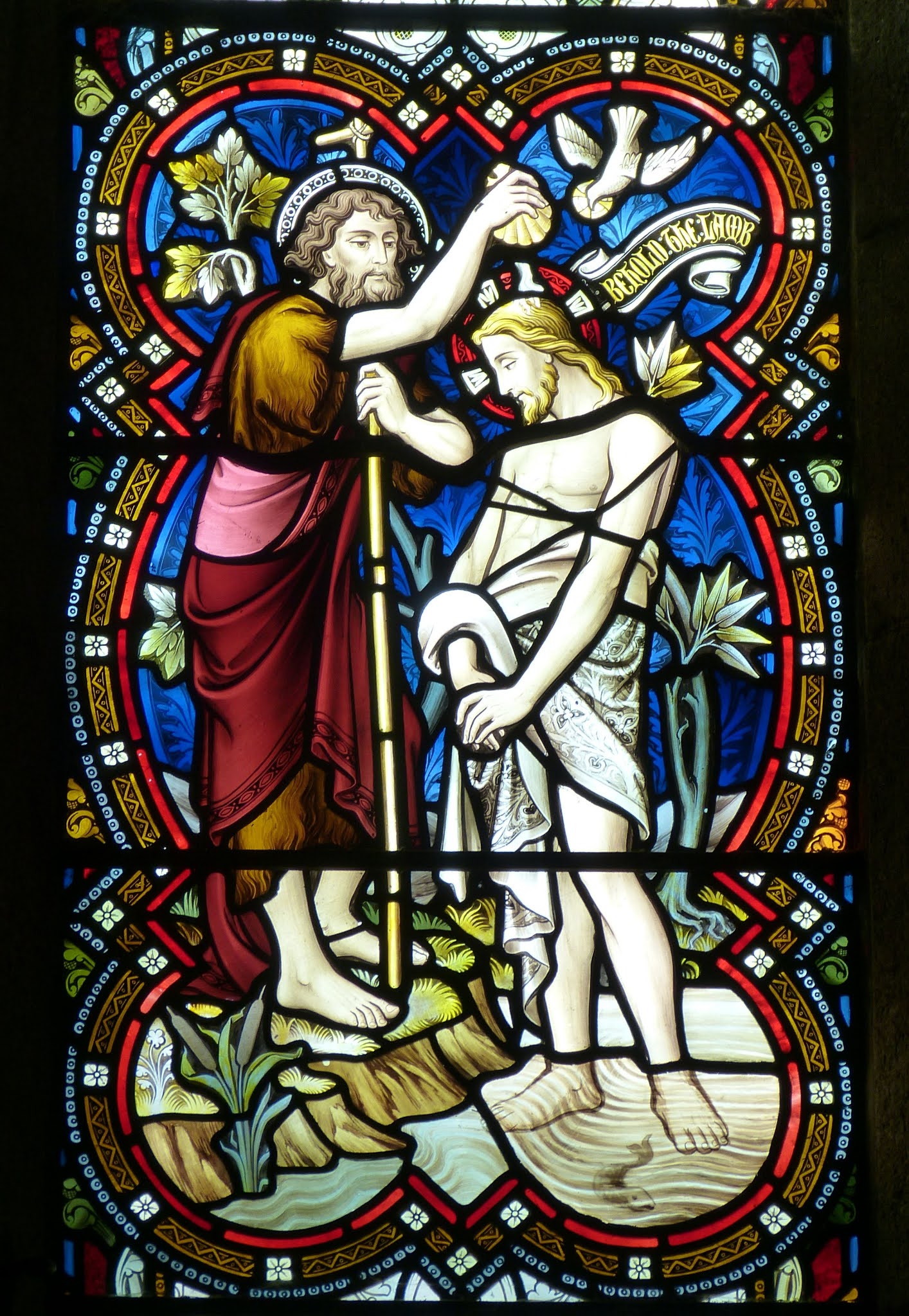
One of the habits of our decades of homeschooling that I most miss is our morning reading time. (Popularly known around here as "together stuff.") We started every day after morning prayers with the Lives of the Saints, followed by oral study of Catechism and History -- then our read-aloud lit time, when everyone got their cuppa and settled in for whatever continuing saga we were currently enjoying. Those were the days when I always knew the day, the date, and the saint's feast day!
Just look at the calendar, right? (Don't get me started on that problem. See, we buy a Catholic calendar at the Church every December and lose it every year by January 1st. That's how organized I am, folks! ) It's a simple thing, though, to order -- or re-order -- a wall calendar that lists out every saint's day throughout the year, and it's a good practice, whether you are five or ninety-five years old to keep on top of the saint of the day. Let me tell you, now more than ever (in my fifties), it's vital to know who's help to beg on any given day! And, for families with children still at home, the daily meet and greet is an important skill to foster. What better way to be grounded in Heaven? Every single day is a Nameday party there! How blessed we are to be Catholics and know we are part of a great big community of helpers, many of whom have the Ear of God, Himself -- and are looking right at Him! Makes you want to bake cupcakes and make saint crafts every day!
Or, well, no. Not really. That would be a bit much. It's more realistic to highlight saints from the calendar periodically.

Who though? We certainly don't want to diss a single holy soul that stands before the throne of God, but honestly, no Mom's got time to make a special presentation for every saint in the calendar, and a party twice a week would lose novelty for the highest sanguine -- so how to choose? A judgment call, for sure. Some months there will be time and motivation for a special saint or feast day celebration every week; sometimes a month will go by without anything to accompany the saints' days but coloring pages -- maybe. Not to worry, though. This is normal; this is life. It's all good, so long as whatever you can do to observe the Liturgical Year is done in the spirit of "visiting some of our dearest friends" and doesn't feel like a burden that becomes something to dread. In a nutshell, it's important in Catholic family life to make a mention of every day's patron, read a short biography whenever possible, add their names to the day's prayers (
"St. Telesphorus, pray for us!") then do what you can when you can -- in a spirit of love and enjoyment.
Remember the Lesser Knowns
Certain saints' names are bound to catch the attention on a quick scan through each month. You know who I'm talking about, right? The "superstars" of the calendar, the familiar, popular saints -- like St. Therese the Little Flower, St. Christopher, and St. Anthony -- are usually simple to plug into a search engine and find their corresponding bios, coloring pages, projects, and menus, but, just like in real life, sometimes we stumble upon our dearest lifelong friends standing behind potted plants. One of our family patrons, St. Hedwig, plucked our collective sleeve many years ago, and she is now indispensable to us, a good friend (and our son, Kevin, actually moved to Germany and lived in her neighborhood!) It behooves us to research the lesser known saints for just this reason. They are treasures, and they want to be a part of our families! (They
do!) Look up the amazing story of little
St. Prisca for instance! (Feastday January 18th.) It's impossible not to fall in love with her bravery and steadfastness! I expect she's a friend of St. Philomena's up in the heavenly tea garden. And she's just one of many wonderful saints that most people have never heard of! The intercession and friendship of the lesser known saints is just as profound and their examples maybe even more-than-ordinarily helpful due to their uniqueness -- and I always imagine we don't tend to call on them often, so they have plenty of time for us!
(wink) One way or another, it's nice to go out of our way to know the unfamiliar saints periodically -- just to make new friends.
 |
| All Saints; Landauer Altarpiece, c.1511 |
Remembering Name Saints and Family FavoritesIn Baptism it's required of all Catholics to be blessed with at least one name that bestows a saintly patron. This is a marvelous thing. Sharing a name with a heavenly friend is a high honor, and so name days, of course, are almost mandatory to remember in some way -- and they're such a delight to observe! Children benefit by the special attention, especially when it's so intricately linked with the spiritual life! If you throw parties for only a limited number of saints, be sure they are your family patrons! But more is better! If a child's mental halls of memory are festooned with happy associations with the Faith, he or she is more likely to want to carry into adulthood that Faith that made childhood so much fun.
Our family is especially spoiled because our surname is specifically taken from St. David of Wales, so we observe March 1st with great fanfare. It's a little known fact that many surnames also have this same privilege. If your family's last name sounds like a first name (or a derivative of a first name), check it out; if your last name sounds like a vocation (like Baker, Taylor, Wagoner), look up the patron for that vocation and you have your family's patron! (Your surname may be translated from another language, as well, and that could lead you to your patron.)

Besides name saints, each family may naturally gravitate toward favorite saints connected to a vocation or hobby: hunting families might especially celebrate St. Hubert's and St. Eustace's feast days; families with many athletes, St. Sebastian's (feast day coming up on January 20th!); families with bakers and chefs, St. Martha's and St. Zita's; writing families, St. Francis de Sales', St. Maximilian Kolbe's, and St. Clare's feast days... The list is endless; there is a patron saint for every interest! Additionally, the liturgical year is packed with opportunities to highlight the patronage of entire Religious Orders! One year, we can concentrate on learning all about the Franciscan saints, another year, the Benedictines, and so on!
But (wince) look at me, turning into one of those recipe bloggers that drags you through five pages of chatter before getting to the point! Sorry. Here you go, with some links for the month:
January at a Glance
January 1st: The Feast of the Circumcision * Holy Day of Obligation *
* Interesting Facts about Jewish Law, as also includes the Jewish practice of Circumcision -- Here.
* Excerpt from The Liturgical Year, by Ab. Gueranger, OSB -- Here.
* The connection between the Feast of the Circumcision and the Holy Name; our family observances -- Here.
* Abbot Gueranger in The Liturgical Year, meditations on the Circumcision -- Here.
Holy Name Sunday
Between the Feast of the Circumcision and the Epiphany
(or January 2nd)
* Prayer to the Holy Name of Jesus by St. Bernard Clairveaux -- Here.
* Practices, Customs, and Observances of the Feast of the Holy Name of Jesus -- Here.
* Sermon on the Holy Name of Jesus by Fr. Philip Davis, CMRI -- Here.
* Sermon of St. Francis De Sales on the Holy Name -- Here.
January 6th: The Epiphany
* Ideas for the Epiphany Celebration (and a peek back to our family's doings in 2009!) -- Here.
* Some pretty cool Epiphany trivia and international celebrations -- Here.
* The absolutely necessary recipe for Magi Bread -- Here. (Can't have Epiphany without it!)
* The text of the Epiphany Blessing and an explanation of what to expect if you are able to invite your pastor over to do the blessing -- Here.
January 10th (2021) Holy Family Sunday
* Catholic Mom's meditations on the Feast of the Holy Family -- Here.
* Sermon by Fr. Benedict Hughes on the Feast of the Holy Family -- Here.
January 13th Commemoration of the Baptism of Christ
* A good day to study up on the sacrament of Baptism and renew our own Baptismal promises, individually or as a family. Fisheaters has a good exposition of the Sacrament -- Here.
* Sermon by St. Vincent Ferrer on the Baptism of Our Lord -- Here.
January 15th: Our Lady of Prompt Succor
* The history and some thoughts on the feast day -- Here.
* Sermon by Fr. Benedict Hughes on Our Lady of Prompt Succor -- Here.
* Novena to Our Lady of Prompt Succor
Begin on January 7th to end on the feast day.
O, Mary, Mother of God, who,
amidst the tribulations of the world,
watches over us and over the Church of your Son,
be to us and to the Church truly Our Lady of Prompt Succor,
make haste to help us in all our necessities,
that in this fleeting life you may be our succor,
and obtain for us
(Mention your intention here...).
Help us to gain life everlasting through the merits of Jesus,
your Son, our Lord and Redeemer.
Amen.
Pater, Ave, Gloria
Our Lady of Prompt Succor,
hasten to help us.
Our Lady of Prompt Succor,
hasten to help us.
Our Lady of Prompt Succor,
hasten to help us.
O Queen of the Universe,
Our Lady of Prompt Succor,
sovereign full of kindness,
you are the advocate of sinners,
a haven of safety to the shipwrecked;
you are the resource of the world,
the ransom of captives,
the health of the infirm,
the consolation of the afflicted,
the refuge and salvation of all on earth.
We beseech you to grant us the help of your prayers,
which incline our Heavenly Father to forgive our sins
and grant our petitions in all the necessities of this miserable life,
prayers which obtain for us an abundance of graces
to receive the pardon of our faults
and arrive at the practice of virtue,
prayers which stop our enemies,
confound their designs,
and triumph over their efforts.
Amen.
January 17th: St. Anthony Abbot
* St. Anthony, the Abbot, has a place in the famous Golden Legend, which can be found -- Here.
* Not the first Catholic monk, but the first to go into the wilderness, St. Anthony lived to the ripe old age of 105! (b.251 AD; d.356 AD). A good day to look up the Monastic Life and study the idea of "the rule" of Religious orders and the lives of monks, at the time of St. Anthony -- and today. Among other things to note, St. Anthony is the patron saint of farmers and basket makers, too. A couple tutorials for making baskets can be found Here and Here.
January 18th: St. Peter's Chair in Rome* This feast day celebrates the unity of the Catholic Church throughout the world within the person of a valid pope centered at the Vatican in Rome, Italy. (Find in Church history the question of early Catholics concerning whether the seat of the Pope should be in Rome or Constantinople!) The feast observes the authority and hierarchy, not the actual, physical throne of the popes through the centuries, but a couple appropriate crafty commemorations of the day can be found Here.
* My Catholic Faith has a good explanation of pretty much everything Catholic, including the primacy of St. Peter and the history and workings of the Vatican in Rome.
January 20th: St. Sebastian* Patron saint of archers, athletes, soldiers, and (who knew?) he's invoked against plagues! So many ways to celebrate this day, but, seeing as St. Sebastian was martyred by arrows, a brave Mom could contrive a way to practice some archery, or take a stab at a home-made set of bow and arrows. Some ideas Here.
* Alternatively, this feast day is a good opportunity for staging a family "Olympics" in honor of St. Sebastian. Be sure and implement handicaps to level the playing field between youngest and oldest children! Make medals! (Hm. Maybe even golden cupcake medals?)
* Check out the catacombs of San Sebastian -- Here and Here. A fascinating unit study, incidentally and worth the trouble of a little research. Most children are intrigued by the very idea of the catacombs, and there is so much fuel for discussion surrounding them -- regarding the determination of the early Christians to practice the Faith in spite of persecution, in spite of civil laws, in spite of grave inconvenience. (Oop. pun unintended!) Pertinent to us in our day.
January 21st: St. Agnes

* Since St. Agnes is the sweet patron saint of purity, today is a good idea to take on this topic with our children and within ourselves -- gently, but without blanching, as it is the most assaulted and least taught virtue of our day, the corruption of which Our Lady of Fatima warned us cast more souls into hell than any other. In small children, even, the subject of purity can be introduced simply by teaching about modesty in dress and modesty of the eyes: why we do not watch certain kinds of movies or read certain kinds of books, why we must avoid certain places and certain people In a nutshell, the simple explanation is that impure and immodest things and people displease Jesus and Mary and lead to sins. We respect the gift of our bodies by behaving modestly; practicing the virtue of purity allows us to focus on our souls and the development of our characters. Gently teaching our youngest children to recognize modesty and purity and how to spot dangers to these virtues is more important than teaching them to avoid drinking poison or playing with poisonous snakes. A wise parent doesn't wait until their children are grown up to teach these things! As our children do grow up and are in danger of being immersed in a culture so replete with temptations, we can be more specific about dangers, cite examples (without naming persons we know, as always), and talk things through frankly. Don't allow pop culture to be your children's teacher in these matters! (OK, stepping off the soap box. But, really; this is important!)
* Girls might enjoy perusing Modest Fashion pages in blogs and on Pintrest to form good mental images of what is both beautiful and pleasing to Our Lady and her Divine son. You can find one Here that I like (if understood properly. We do not need to look like Mennonites to be modest!) -- and Here, the thoughts of a holy priest.
* A Mom's thoughts (mine ;0) ) on St. Agnes and purity in current times. Here.
* Sermon of St. John Vianney on Purity -- Here.
January 23rd: St. Raymond of Pennafort*A long-time favorite of ours! The Amazing story of St. Raymond -- Here.
* Coloring page for St. Raymond -- Here.
* St. Raymond's story is a great one for discussing the importance of removing ourselves from the company of immoral friends. Look what this holy priest did to escape King James I of Aragon's wickedness -- a decision to flee which God obviously blessed with a great miracle -- one that ultimately converted the king.
January 25th: the Conversion of St. Paul
* Read the story of the Conversion of St. Paul and have your children tell it back to you -- either verbally or written, paying attention to the chronological order. Illustrate. Like
This. (I got a big kick out of looking back at this 1st grade memory of our Catherine, who is due any day now with her first baby!)
* The perfect day to pay extra attention, pray extra prayers, offer extra sacrifices for the conversion of sinners -- those who have never known the Faith and those who have fallen away from the Faith -- especially those who are close to us. St. Paul's intercession is very powerful today, so I think I'd add a plea to him, along with the Blessed Mother's in this prayer:
January 29th: St. Francis DeSales* A saint whose life spurs a discussion or meditation concerning the perfection of our temperaments. Born a choleric, St. Francis De Sales never excused his temper, saying: "that's just how I am; accept me, accept my faults." (Common philosophy today!) Instead, he worked so successfully to perfect himself, that, by the time he died, everyone assumed St. Francis was born a gentle phlegmatic. Good lesson for imitation! Good discussion to have with children.
* Everything about St. Francis DeSales, including a short bio, quotes, and recipes -- Here.
* Litany of St. Francis De Sales and excerpt from Dom Gueranger's Liturgical Year biography -- Here.
* Novena to St. Francis De Sales; Begin on January 21st to end on his feast day.
O Blessed Francis de Sales, who in thy mortal life did excel in all virtues, especially in love of God and of neighbor, I earnestly entreat thee to take me under your immediate protection,
to obtain from God my perfect conversion, and that of all sinners, especially of (Name/s her)
Teach me, O Father, to fix my eyes on heaven, that I may generously trample under foot every obstacle that presents itself in my way, and attain that degree of glory which you in your mercy hold out to me.
Obtain also the favour for which I now pray: (mention your request here).
Assist us O Lord, we beseech Thee, through the merits of St. Francis de Sales that, what our endeavours cannot obtain may be given to us by his intercession.
Concluding Prayer
O God, who for the salvation of souls, didst will that St. Francis de Sales should become all things to all men and women, mercifully grant that we, helped by the gentleness of his charity, guided by his teachings, and sharing in his merits, may obtain eternal happiness. This we ask through Christ our Lord. Amen.
January 31st: St. John Bosco
* The Salesian Method of Education -- and how to nip trouble in the bud. Reprint of St. John's own words -- Here.
* What we, as parents, have learned from St. John Bosco (A LOT) -- Here.
* Having started out with four boys, we turned early to St. John Bosco for heavenly assistance, basing much of our homeschooling and our parenting philosophy on his methods. Don Bosco knew how to deal with children, but especially boys, let me tell you! We have had great success using him as a role model for parenting all our children, though, boys and girls! His "Salesian Method" and his intercession through prayer have never failed us. Parents might be interested in this letter from St. John Bosco regarding the teaching of children. You can find a read-aloud version of the story of Don Bosco here. The children especially love the ghost story with the Catholic explanation and love the stories of Grigio, his dog.
* Novena to St. John Bosco. Start on January 23rd to end on his feast day!
O glorious St John Bosco, by that great love which thou didst bear towards Youth, of which thou didst make thyself Father and Teacher, and by the heroic sacrifices thou didst bear for its salvation, obtain for us, that we also may love with a holy and generous love this chosen portion of the Heart of Jesus and that in every child we may see the adorable person of our Divine Savior.

Glory be to the Father, etc.
O glorious St John Bosco, who didst love the virtue of purity with a love of predilection, and who didst inculcate it by word, writing, and example, obtain that we too, enamored of so indispensable a virtue, may practice it constantly and diffuse it by every means in our power.
Glory be to the Father, etc.
O glorious St John Bosco, who wert ever so compassionate towards human miseries, look down upon us, so greatly in need of thine aid; pray that the maternal blessings of Mary, Help of Christians may descend upon us and upon our families ; obtain for us all the spiritual and temporal favors of which we stand in need ; intercede for us in life and in death, so that we, too, eternally may sing the Divine mercies in Paradise.
Glory be to the Father, etc.
Prayer to Mary, Help of Christians

Most Holy and Immaculate Virgin, Help of Christians, we consecrate ourselves entirely to Thee and we promise always to labor for the greater glory of God and the salvation of souls. We pray Thee to turn thine eyes of pity on the Church, priests and missionaries; on our relatives and benefactors; on the youth confided to our care; on poor sinners and the dying, and on all the souls in Purgatory. Teach us, O most tender Mother, to copy in ourselves the virtues of St. John Bosco, particularly his angelic modesty, profound humility and ardent charity.
Grant also, O Mary, Help of Christians, that through thy powerful intercession we may be victorious over the enemies of our souls in life and in death, so that with Saint John Bosco we may be gathered round Thee in thy home in heaven. Amen.
Ejaculation: Mary, Help of Christians, pray for us. (300 days indulgence.)
A Few Resources for Celebrating the Feast Days
When teaching anything, we always tried to incorporate as many of the human senses as possible in order to appeal to the different learning styles of all our children. To wit, on the feast days: to imprint happy memories of the lives of the saints, appeal to sight (imagery appropriate to the feast day, decorations, attractively presented food), touch (hands-on help with baking, decorating, crafts), taste (feast day menus and goodies!), and hearing (music and read-alouds about the lives of the saints). The internet, used properly is a treasure trove of ideas and resources for books on, not only the biographies of the saints and feast days, but on ways to celebrate them.
* The first book that fell into our hands (not by accident, I'm sure!) that addressed truly celebrating the feast days of the Church was Around the Year by Maria Von Trapp. Because of the rich traditions we stole from the Austrians (wink) over thirty years ago, Holy Week and Easter are, I'm pretty sure, unanimously our family's favorite time of the Liturgical Year. Thankfully, this book has been reprinted and can be found -- Here, among other places!
* My Name Day Come for Dessert is a longstanding tool for us, for celebrating feast days. We have the 1962 edition, which is hard to find in hard copy -- but it's now on Kindle for less than $5! Nice resource!
* Catholic Cuisine is a longstanding blog with numerous contributors that can occasionally swing Novus Ordo (saints' dates, for instance), but which is still a great resource for recipes and ideas, incorporating all the traditional feasts, as well. There are some amazingly creative cooks out there! The Catholic Foodie is similar, but harder to navigate.
* The Catholic Toolbox blog has crafting ideas that can be adapted to Traditional Catholic Feast days; you just have to look around a bit.
* A recent post regarding music during the extended season of Christmastide -- Here.
* The Singing Nuns CDs are available -- Here!
* Thoughts on a Catholic Family's "Setting the Scene" for holiness and happiness -- Here.
** Heads up! Now's the time to get ready: Candlemas Day Blessings are in about a month (February 2nd) Order Candles Now! Shipping in so many areas has slowed to a crawl recently. You can choose from Here. Or your chapel gift store or local Religious may have some you can purchase, but don't wait to long! (Must be at least 51% beeswax)
All of us can attain to Christian virtue and holiness,
no matter in what condition of life we live
and no matter what our life work may be.
- Saint Francis de Sales


 So impressed was the pope with St. Raymond's learning, that he was assigned the task of updating and organizing the previous 80 years of canon law decrees, which effort resulted in the Decretals (published in 1234). Having then reached the age of 60, St. Raymond was permitted to retired from the job at the Vatican. He tried to sneak away to a quiet life in Barcelona, but it was not meant to be; he was almost immediately called up to serve as Archbishop of Barcelona (much against his will!) -- but, exhausted from a life of constant labor, he became ill and had to resign within two years.
 But, St. Raymond was still not finished. Or, rather, God was not finished working through St. Raymond. Having made the acquaintance of St. Thomas Aquinas, St. Raymond encouraged the Angelic doctor in his work, Against the Gentiles. St. Raymond, himself no fledgling in the work of conversions, contributed constant labor toward the conversion of the Muslims and the Jews. St. Raymond was responsible for the teaching of Arabic and Hebrew in several Dominican friaries toward this end. He founded Dominican Houses in Murcia (at that time still ruled by Muslims), as well as in Tunis and Mallorca.