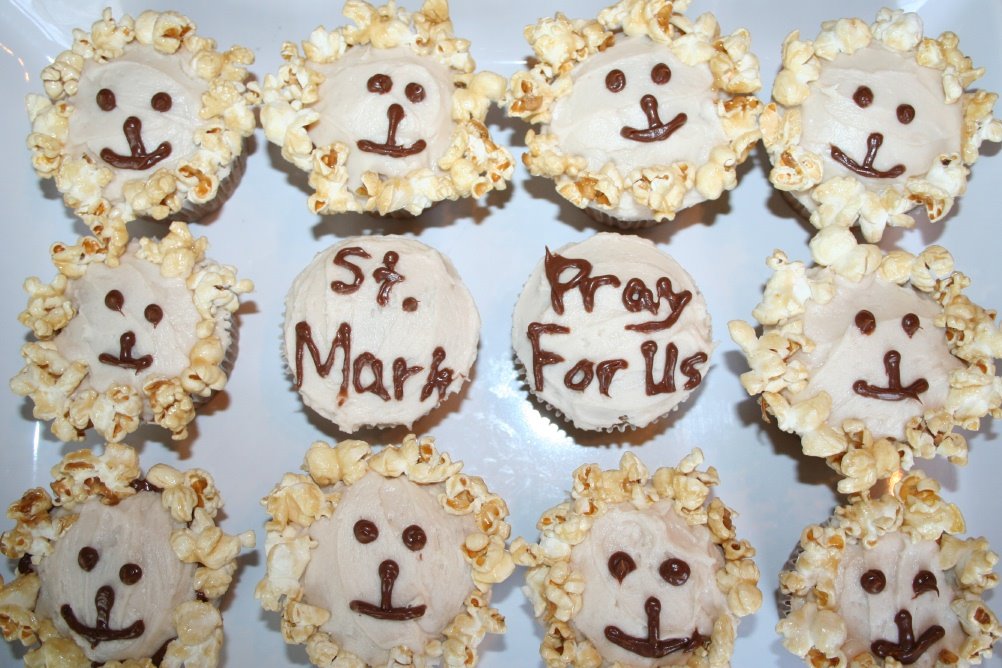
Friday, May 17, 2013
Please Submit Captions
" __________________________________________________"
(Some backstory for inspiration: His Daddy, our son, Paul, is on his way home from Jordan today!)
| Reactions: |
Letting Them Be Themselves, for Better or for Worse
![]() |
| Paul & Nicole |
![]() |
| Grandbaby Gavin (This photo needs a caption!) |
![]() |
| Jon/Br. Philip |
![]() |
| Theresa |
![]() |
| William and Captain Dominic |
![]() |
| William & Michelle |
![]() |
| Kevvy |
![]() |
| Dominic (When at Seminary. Home now for health sabatical) |
![]() |
| Theresa and Cathy |
![]() |
| Michelle/Shelly/Chicky |
![]() |
| Kevvy and Dominic -- being themselves. |
![]() |
| Top-bottom: Anna, Gabe, William |
![]() |
| Gabey. |
![]() |
| Michelle & Br. Philip/Jon |
![]() |
| Kevvy |

![]() |
| William |
![]() |
| Cathy and Friend |
![]() |
| Cathy putting something over on William. |
![]() |
| Crazy Anna |
Maybe not all so tiny any more. But definitely a madhouse.
Maybe I've gone overboard in encouraging them to be themselves...
| Reactions: |
Sunday, May 12, 2013
Titles of Mary: Star of the Sea
Labels:
Our Blessed Mother
WHEN for me the sun is setting
At the close of life's brief day;
When my little ship is nearing
Port in yonder crystal bay;
Then, 0 my beloved Mother,
Stretch thy kind hand out to me,
Shield me, till my feet have touch'd the
Shore sand of eternity.
When my strength begins to vanish,
And earth's memories to fade;
When my friends stand sad and silent,
Powerless to give me aid;
Then, my beloved Mother,
Hold my trembling hand in thine,
Till my eyes shall see the steeples
Of the Holy City shine.
And earth's memories to fade;
When my friends stand sad and silent,
Powerless to give me aid;
Then, my beloved Mother,
Hold my trembling hand in thine,
Till my eyes shall see the steeples
Of the Holy City shine.
When at last my weary spirit
Seeks admission to thy throne,
When my lips in anxious longing
For thy gracious blessing moan!
Then, 0 thrice beloved Mother,
Open wide thy home and heart,
And let me, thy child, dwell ever,
Where thou Queen and Mother art.
~Anon.
Title of Our Lady: Star of the Sea
The second Sunday in May has been traditionally designated as Stella Maris Sunday in many parts of the world. This title of Our Lady, Star of the Sea -- or Stella Maris -- has always been one of my favorites. As the daughter of a Navy man, I grew up near the ocean and always tended toward tales of the sea -- and even as a child, when asked what I wanted to be when I grew up, I'd say, "an oceanographer." Which didn't happen. Alas, now I'm about as landlocked as a person can get, living in Colorado, but I still appreciate the meaning of Mary -- as a Star of the Sea. She is our refuge, our guide, our compass -- our North Star. As sailors once depended upon the night sky to find their way, we can depend upon our Blessed Mother in the stormy seas of life.
St. Bernard of Clairvaux (12th century) tells us:
"If the winds of temptation arise; If you are driven upon the rocks of tribulation look to the star, call on Mary; If you are tossed upon the waves of pride, of ambition, of envy, of rivalry, look to the star, call on Mary. Should anger, or avarice, or fleshly desire violently assail the frail vessel of your soul, look at the star, call upon Mary."
Going back to the Old Testament from the time of St. Bernard, we find the first reference to the Mother of God as Star of the Sea in the Bible -- in 1 Kings 18:41-45:
41And Elias said to Achab: Go up, eat, and drink: for there is a sound of abundance of rain.
42Achab went up to eat and drink: and Elias went up to the top of Carmel, and casting himself down upon the earth put his face between his knees,
43And he said to his servant: Go up, and look toward the sea. And he went up, and looked, and said: There is nothing. And again he said to him: Return seven times.
44And at the seventh time, behold, a little cloud arose out of the sea like a man's foot. And he said: Go up and say to Achab: Prepare thy chariot and go down, lest the rain prevent thee.
45And while he turned himself this way and that way, behold the heavens grew dark, with clouds, and wind, and there fell a great rain. And Achab getting up went away to Jezrahel:
The little cloud that Elias and Achab saw from Mt. Carmel has been interpreted(1) as the 'Star of the Sea' and Mary, then, like the quenching rains, is the sign of hope for mankind. It was on this same hill of Carmel that the Carmelites built a church in the early thirteenth century that they titled Stella Maris. Though the abbey has been destroyed several times, it is always rebuilt and is still considered the headquarters of the Carmelite order to this day.
St. Jerome is believed to have had a part, as well, in the coining of this title of Our Blessed Mother(2). In his writings of the early fifth century he refers to Mary as Stilla Maris, which is translated "drop of the sea." It's possible that a transcriber inadvertently substituted an "e" for the "i" in Stilla -- and thus we have changed "drop" to "star." However it came about, we have numerous references to Our Lady as Stella Maris through the centuries; St. Isidore of Seville (d. 636); Alcuin (d. 804); and Rhabanus Maurus (d. 856) all use the title, as well as Paschasius Radbertus (d. 865) who wisely pronounced:
Mary, Star of the Sea, must be followed in faith and morals lest we capsize amidst the storm-tossed waves of the sea. She will illumine us to believe in Christ, born of her for the salvation of the world.
Through the centuries, many hymns have also been dedicated to Our Lady under the title Star of the Sea. We have Ave Maris Stella (eigth-ninth century); and Alma Redemptoris Mater (by Hermann of Reichenau, eleventh century), for instance, as well as one of my all-time favorites:
Our Lady, Star of the Sea, is patroness of the Catholic missions to seafarers, the Apostleship of the Sea, and to many coastal churches around the world which have been named in her honor.
Mother of Christ,
Star of the sea,
Pray for the wanderer,
pray for me!
| Reactions: |
Friday, May 10, 2013
Three Days 'Til the Most Important Holiday of the Year...
| Reactions: |
Thursday, May 9, 2013
Happy Ascension Thursday!
Answering the Question: Where exactly was Christ when He ascended into heaven on Ascension Thursday?
Here is a quote from The Golden Legend, an early compilation of known Christian history (a.k.a."legends"), written in 1275, by Jacobus de Voragine, Archbishop of Genoa:
As to the first he ascended from the mount of Olives by Bethany; the which mountain, by another relation, is said the mountain of three lights. For by night on the side of the west it is lighted of the fire that burneth in the Temple, which never is put out ne quenched. On the morning it is light of the orient, for she hath first the rays of the sun before it shineth in the city, and also it hath great abundance of oil that nourisheth the light, and therefore it is said the hill of three lights.
Unto this hill Jesus Christ commanded his disciples that they should go. For on the day of his Ascension he appeared two times, one time to eleven disciples that ate in the hall where they had supped with him. All the apostles and the disciples and also the women, abode in that part of Jerusalem which is called Mello, in the mountain of Sion, where David had made his palace. And there was the great hall arrayed and ordained for to sup, whereas Jesu Christ commanded that they should make ready for to eat the Paschal Lamb, and in this place the eleven apostles abode, and the other disciples, and the women abode in divers mansions there about.And when they had eaten in this hall, our Lord appeared to them and reproved them of their incredulity. And when he had eaten with them, and had commanded them that they should go to the Mount of Olivet on the side by Bethany, he appeared again to them, and answered to them of the demands that they made to him indiscreetly, and with his hands lifted he blessed them; and anon before them he ascended unto heaven.
Of the place of this ascension saith Sulpicius, Bishop of Jerusalem, and it is in the Gloss. For there was edified a church in the place where were made the signs of his ascension. Never sith [afterwards] might be set there any pavement, it could not be laid ne set but anon it issued out, and the stones of the marble sprang into the visages of them that set it. And that is a sign that they be stones on which Christ passed upon, which lie in the powder and dust, and abide for a token and sign certain.
The footprints said to be His are now enclosed in a shrine called the Chapel of the Ascension near the top of the mountain (picture above). The original building was destroyed by the Persians in A.D. 614, but was rebuilt by Crusaders. The Moslems took control of the building in the 13th century and transformed it into a mosque, walling in the arches, and adding a dome, but Christians Jews, and Moslems, alike, claim the building as a religious site -- and as of this writing, all faiths are welcome to visit there.
Unfortunately, though, any visit to this part of the word is a risky venture --- in our day as it has been through the centuries, but the long-standing conflict between Christians and Muslims gotten worse in the last decade than it's been since the crusades I think. When traveling to the Middle East, tourists (brave folks!) are warned against wearing medals or scapulars or other symbols of their Christianity where they can be seen outside clothing. I worry for our son, Paul, who is still on a mission in Jordan -- a country where there are only three Christians to every 100 Moslems. Painful to think that this was the land that Jesus' knew, where His precious feet walked, where His Gospel was first taught. It's a shame to think that we'd take our lives in our hands to travel to the Chapel of the Ascension in order to see for ourselves Christ's footprints in the stone where He ascended into heaven. But, oh my! Wouldn't it be awesome to take the chance! Can you imagine seeing them with your own eyes?
| Reactions: |
Thursday, April 25, 2013
The Feast of St. Mark
Labels:
Saints
What do you know about St. Mark? Even though, Mark is my husband's middle name, and therefore, one of his patrons, until I did some research this afternoon, I knew very little. Even though St. Mark is one of the four Evangelists, he seems somehow to hide in the shadows of the Bible. He's just a little bit anonymous, in other words: he's not like St. Matthew, unversally known for being the Jewish tax collector; he's not St. Luke, the physican, who learned the tales of the Bible through the lips of the Mother of God; he's not St. John, the beloved Apostle, who survived being boiled in oil... So who is St. Mark?
Abbot Gueranger says in the Liturgical Year:
Mark was the beloved disciple of Peter; he was the brilliant satellite of the sun of the Church. He wrote his Gospel at Rome, under the eyes of the Prince of the Apostles. The Church was already in possession of the history given by Matthew; but the faithful of Rome whished their own Apostle to narrate what he had witnessed. Peter refused to write it himself, but he bade his disciple take up his pen, and the Holy Ghost guided the hand of the new Evangelist.
Yes. But what do we know about the man?
After looking around (and around and around), I've found that we do have one or two facts -- and a lot of guessing -- about St. Mark. He was believed to have been born in Jerusalem and was the cousin of Barnabus, the disciple of St. Paul. He is reported to have been a Jewish priest and a learned man, and it is traditionally believed that he was a married man when he became a Christian. St. Mark's mother, (another) Mary, seems to have been one of the faithful women of the early Church; it was to her home that St. Peter apparently fled after his release from prison (Acts 12:12-13).
But St. Mark did more than just write. After the Gospel was finished, St. Peter continued to make good use of his faithful friend, sending him to Aquileia (an ancient Roman city at the head of the Adriatic Sea), then to Egypt -- namely Alexandria -- and Antioch. In Alexandria, St. Mark founded one of the first Christian schools and instituted what has been called the first seed of monastic life in his Therapeutes. It was in Alexandria that the success of St. Mark's preaching resulted in his martyrdom. He was dragged to his death by a rope tied around his neck in the year 68 AD, after some thirty-five years laboring for the Church.
The Greater Litanies Procession is also on this day.
Here is the post from last year about this traditional recitation of these powerful intercessory prayers. And here are pictures of the blessing of the farm, along with the text of some of the traditional blessing prayers.
(Tho I looked almost everywhere in cyberspace, all info here was gleaned from The Catholic Encyclopedia and The Liturgical Year, with a couple of the speculations about his meeting the Apostles gleaned from Wikipedia and a Coptic Church site. Oh, and the drawing above is "The Head of St. Mark" by Albrecht Durer )
** Repost from 2010. Please forgive me, once again, I beg you, if any of these links are broken. Just not enough time to check them all... (Does anyone ever actually go to the links, though, really? ;0)
Abbot Gueranger says in the Liturgical Year:
Mark was the beloved disciple of Peter; he was the brilliant satellite of the sun of the Church. He wrote his Gospel at Rome, under the eyes of the Prince of the Apostles. The Church was already in possession of the history given by Matthew; but the faithful of Rome whished their own Apostle to narrate what he had witnessed. Peter refused to write it himself, but he bade his disciple take up his pen, and the Holy Ghost guided the hand of the new Evangelist.
Yes. But what do we know about the man?
After looking around (and around and around), I've found that we do have one or two facts -- and a lot of guessing -- about St. Mark. He was believed to have been born in Jerusalem and was the cousin of Barnabus, the disciple of St. Paul. He is reported to have been a Jewish priest and a learned man, and it is traditionally believed that he was a married man when he became a Christian. St. Mark's mother, (another) Mary, seems to have been one of the faithful women of the early Church; it was to her home that St. Peter apparently fled after his release from prison (Acts 12:12-13).
We don't really know for sure, but there are many traditions explaining how St. Mark entered into the service of the Apostles. Of course it could have been through the instigation of his mother that he became a Christian and met the Apostles, but there are other ideas floating around out there, as well. One account supposes that it may have been Mark who carried water to Jesus and the Twelve at the Last Supper and there is speculation that Mark was one of the servants at the Marriage at Cana who poured out the water that Jesus turned to wine (John 2:1-11). In addition to these conjectures, it is thought that St. Mark was referring to himself when he told about the young man who ran away naked when Jesus was arrested (Mark 14:51-52), and the Coptic Church believes it was St. Mark who hid the disciples in his house after the crucifixion, into whose house Jesus came after the Resurrection (John 20), and into whose house the disciples received the Holy Ghost at Pentecost -- and that Mark may have been one of the Seventy Apostles sent out by Jesus (Luke 10:1). But all of this is speculation. What we do know for sure is that St. Mark, though not counted as one of the twelve Apostles, became a trusted ally and helper of the first pope, so trusted that St. Peter gave him the job of writing his account of the life of Christ.
But St. Mark did more than just write. After the Gospel was finished, St. Peter continued to make good use of his faithful friend, sending him to Aquileia (an ancient Roman city at the head of the Adriatic Sea), then to Egypt -- namely Alexandria -- and Antioch. In Alexandria, St. Mark founded one of the first Christian schools and instituted what has been called the first seed of monastic life in his Therapeutes. It was in Alexandria that the success of St. Mark's preaching resulted in his martyrdom. He was dragged to his death by a rope tied around his neck in the year 68 AD, after some thirty-five years laboring for the Church.
The Greater Litanies Procession is also on this day.
Here is the post from last year about this traditional recitation of these powerful intercessory prayers. And here are pictures of the blessing of the farm, along with the text of some of the traditional blessing prayers.
(Tho I looked almost everywhere in cyberspace, all info here was gleaned from The Catholic Encyclopedia and The Liturgical Year, with a couple of the speculations about his meeting the Apostles gleaned from Wikipedia and a Coptic Church site. Oh, and the drawing above is "The Head of St. Mark" by Albrecht Durer )
** Repost from 2010. Please forgive me, once again, I beg you, if any of these links are broken. Just not enough time to check them all... (Does anyone ever actually go to the links, though, really? ;0)
| Reactions: |
Tuesday, April 23, 2013
The Feast of St. George
Labels:
Saints
Now here is a saint of mystery, legend, and glory. The popular story of St. George, passed down to us in the Golden Legend, has dragons and princesses running around, with our hero saving the day. This is the familiar tale and the origin of our saint's iconography, but, there are other legends of St. George, too. In one of the earliest legends , he's put to death, chopped up into little pieces, buried, and set on fire ~ three times ~ and each time God restores him to life! A more likely possibility, though, but no less heroic, is the figure of St. George as a martyred Roman soldier, perhaps the one who tore down Diocletian's edict of persecution at Nicomedia. That would have been, in my mind, a feat at least as courageous as facing a dragon!
Still, even that is legend.
We do know, though, that St. George lived in the late third century in Nicomedia, and that he likely was martyred at Lyda, and we're pretty sure he was a high ranking Roman soldier. But, we do
n't know for certain what the real story of this saint may have been. The details of his martyrdom have been lost to history, but his fame over two millenia has only grown. Whatever may have been the truth, we know it must have been amazing and heroic, based on the legends that have grown up around him!
St. George is one of the Fourteen Holy Helpers, and was chosen above a heaven full of saints to be the patron of England: Greece, Portugal, Russia, Bulgaria, Germany and the Netherlands, among others.
He is also the patron saint of: horsemen, calvary soldiers, soldiers in general, farmers, lepers, shepherds, scouts, farmers, and Teutonic knights.
The flag of St. George, bearing the red cross on a white background is the standard of England and Georgia, and is the municipal flag of Montreal, Barcelona, Milan, Genoa, and Padua, among others.
* England, however, is considering doing away with the flag of St. George, as they deem it now too "warlike" and possibly offensive to Muslims. All I have to say about that is: God helps us. See that story here.
* And, though, St. George's Day is still a national day of celebration in England, it seems to have hit on some controversy. If you're interested in getting a sense of the British people's thorough confusion these days, look here to see how they are attempting to redefine the "symbolism" of St. George and the his flag to reflect modern sensibilities. (gag,gag)
Dragons = sin, evil, wickedness
Princess = God's Truth, Holy Mother Church
So, St. George defends the Truth of the Church against that wicked influence that would try to defeat it, from Diocletian to the Muslim tide during the crusades (and today!), and all the humanism and pagan influences of the modern day, as well as the personal dragons each of us must slay to perfect our own souls and win heaven.
~~~
On a lighter note: You can find an awesome, realistic coloring page of St. George and the Dragon, here,* and a simpler one here.
Catholic Cuisine has a plethora of fun ways to celebrate St. George's Day, including this totally cool dragon cake!
And, if the children would like to "play" St. George and the dragon today, Kimberlee at Pondered in My Heart has the best sword making tutorial here, and here is a shield-making tutorial.
* We, um, just realized upon printing these out, that the colorers, will have to, um, provide some clothing for poor, cold St. George on this coloring page...
** Repost from 2009 (Please forgive me if any of these links is not working any more. I just haven't had the time to recheck them all!)
| Reactions: |
Wednesday, April 17, 2013
The Big Kids Vs.The Little Kids
When I was a new parent (are you shocked I can remember back that far?), I had this idea that there was a right way and a wrong way to raise children. And I thought my way was the right one, of course. I had it all figured out. It was all drawn out in black and white, and it was good enough for anyone if it worked for me.

I laugh now. {snort}
You see, back when I thought that way? Well, we were only about one or two kids into our family; I hadn't been around my own life very long yet. I didn't know that before all was said and done we would raise every single one of our children differently from the rest. And none of them by the blueprint I'd had in my mind in the beginning. You see, there was no way around the fact that these children of ours are all so dollgarn different from each other!
Not only that, but as the years went on, Dan and I were different! And the family dynamics for each child at each individual stage of his or her life was different, too. Heck! The world is different now than it was in 1989! Though the basics have remained the same for us since then in relation to faith, morals, and basic values, our family and how we manage it has morphed and fluctuated and changed with the times and the people. Which is normal and good.
It really is, kids.
You see, it's been a popular complaint among our oldest children, this discrepancy in parenting techniques. Actually, it's a common whine in pretty much any big family I've ever met. The oldest kids always think the youngest kids are getting a break. The youngest kids, in return, think the oldest kids are mean. And they don't think they're getting things one bit easier.
And, believe me, they're not.
I have no doubts about this, and no guilt. They say with age comes wisdom, and I am here to unequivocally maintain that this is true. (Because I know what unequivocally means and I can spell it....) No, but, really, it's a fact. In our forties, Dan and I have way more wisdom than energy available for parenting. And I really believe that's part of the Divine Plan. God is so good; those who give their reproductive lives completely to His Hands know a poetic symbiosis unique to big families. This is one example: with our first handful of kids, we needed the energy of youth to corral all those little ones more than we really needed wisdom. In the early
days, it was all about perseverance and consistency. Now, with all ten children at ten different stages of childhood and early adulthood, energy is a nice bonus, but what we really need is wisdom to properly coordinate and juggle and prioritize everything and everybody. And still have a little oomph left over for one another as a married couple. It takes smarts, and lots of planning, yes indeed.
But in the end, though the road to the finish line for each child has been different, with God's help (and the children's cooperation), everyone ends up even.

So, you see, Big Kids, our parenting of you vs. the Littles has been different but equal. We're just as mean as we ever were; we're just more efficient about it. Have no fear: with the instinct hatched at the same time you were, we know exactly the right way to be mean to each and every one of you. Muwahahaha!
And we also know how to love each of you best.
| Reactions: |
Subscribe to:
Posts (Atom)


And when they had eaten in this hall, our Lord appeared to them and reproved them of their incredulity. And when he had eaten with them, and had commanded them that they should go to the Mount of Olivet on the side by Bethany, he appeared again to them, and answered to them of the demands that they made to him indiscreetly, and with his hands lifted he blessed them; and anon before them he ascended unto heaven.